

Last Updated: October 26, 2026
Quick Summary
Florida vacation rental legal requirements come from two layers: statewide law sets the baseline for licensing, taxes, and safety through the DBPR, while cities and counties add their own registration, zoning, and inspection rules. A Florida vacation rental needs a state certificate of registration, local business tax receipt, tax registrations, and pool safety compliance before you accept a booking.
- The DBPR certificate of registration attaches to the property, not the owner, so selling a rental transfers obligations.
- State preemption limits local duration and frequency rules but does not erase local business tax receipts, zoning limits, or inspections.
- Register with the Florida Department of Revenue for sales tax and with the county for the tourist development tax.
- Pool barriers need a self-closing, self-latching gate, and a failed inspection can suspend a rental permit mid-season.
- HOA and condo documents can ban short-term rentals even where the city permits them, so review them before purchase.
Table of Contents
- Who Regulates Florida Vacation Rentals?
- Florida Vacation Rental License Requirements
- How Local Ordinances Shape Short-Term Rental Rules
- Florida Vacation Rental Taxes: Sales and Tourist Development
- Florida Vacation Rental Pool Safety Requirements
- Your Florida Short-Term Rental Compliance Checklist
- Choosing a Property Manager Who Handles Compliance
- Book a Compliant Waterfront Villa in Cape Coral
- Frequently Asked Questions
Who Regulates Florida Vacation Rentals?
Florida vacation rental legal requirements come from two layers of government, and confusing them is the most common mistake owners make. Statewide law sets the baseline for licensing, taxes, and safety. Cities and counties then add their own registration, zoning, and inspection rules on top.
The state framework is administered by the Department of Business and Professional Regulation, known as the DBPR. State law also contains a preemption provision that limits how far local governments can go in regulating short-term rentals, but preemption is narrower than many owners assume.
This guide walks through both layers, in order.
Florida Vacation Rental License Requirements
A Florida vacation rental license is not a single document. It is a stack of registrations that must all be in place before you accept a booking, and each one comes from a different authority.
State Registration and the DBPR
The DBPR handles the statewide vacation rental certificate of registration. The DBPR publishes current application steps and renewal guidance at Florida DBPR vacation rental resources.
Two details trip people up. First, the certificate attaches to the property, not the owner, so selling a rental transfers obligations. Second, the state registration does not substitute for anything local.
Local Business Tax Receipts and Permits
Most Florida cities and counties require a local business tax receipt before a rental operates. Some also require a separate short-term rental permit, a certificate of use, or a life-safety inspection.
A practical approach: call the local business tax office before you list the property, ask specifically about short-term rentals, and get the answer in writing.
How Local Ordinances Shape Short-Term Rental Rules
Local ordinances are where Florida short-term rental compliance actually gets decided. A city or county can require registration, set occupancy limits, mandate a local responsible party, require inspections, and restrict how often a property may be rented. The statewide certificate of registration is a floor, not a ceiling.
The State Preemption, Precisely
Florida law contains a preemption provision that limits how far local governments can go in regulating short-term rentals, but it is narrower than many owners assume. The preemption generally restricts local governments from prohibiting short-term rentals or regulating their duration or frequency, but it does not erase local business tax receipts, zoning limits, life-safety inspections, or private restrictions.
How Rules Differ Across Major Florida Jurisdictions
There is no single Florida short-term rental rulebook. The variation is the point, and it is why a jurisdiction-by-jurisdiction check is unavoidable. The patterns below are illustrative of how requirements diverge, always verify current rules with the specific city or county, because ordinances change and are amended frequently.
- Miami-Dade County and the City of Miami Beach. These jurisdictions have among the most developed short-term rental frameworks in the state, including registration requirements, certificate-of-use processes, occupancy limits, and inspection regimes. Miami Beach in particular has layered local rules on top of state registration, and enforcement is active.
- Orlando and Orange County. A large short-term rental market with county-level registration and inspection requirements, plus tourist development tax obligations. Rules can differ between the county and individual municipalities.
- Tampa and Hillsborough County. Local business tax receipt requirements plus city-specific short-term rental registration in some areas, with zoning restrictions that can prohibit rentals in certain districts.
A practical approach: identify the exact taxing authority and the exact zoning district for the property, then call the local business tax office and the planning department before you list.
Rental Duration and Frequency Rules
Rental duration and frequency rules are the sharpest edge. Some jurisdictions draw a line between short-term and long-term stays that changes which rules apply, a stay of a certain number of days may fall under hotel-style regulation while a longer stay falls under residential rules. Frequency caps, where they exist, limit how many short-term rentals a property may host per calendar year.
Zoning and Land-Use Restrictions
Zoning and land-use restrictions can prohibit short-term rentals outright in certain districts, regardless of any license held. A property in a residential district may be limited to long-term rentals, while a property in a tourist or mixed-use district may have broader latitude. Confirm the zoning designation before purchase, not after.
Private Restrictions: HOA, Condo, and Deed
Private restrictions matter just as much. HOA covenants, condominium documents, and lease terms can ban short-term rentals even where the city permits them. A state certificate does not override a deed restriction, and neither does a local permit. Review the declaration, bylaws, and any rental amendment before you buy, this is the single most common source of post-purchase surprises in Florida.
A state certificate of registration, a local business tax receipt, and a city permit can all be in place while an HOA covenant still prohibits short-term rentals. Compliance is the intersection of all layers, not any one of them.
Florida Vacation Rental Taxes: Sales and Tourist Development
Florida vacation rental taxes are collected at two levels, and both apply to short-term stays. The state sales tax applies to rental charges, and most counties add a tourist development tax, often called the bed tax, on top.
Registration is separate from licensing. Filing frequency depends on the volume of tax collected, and the Department of Revenue publishes current registration and filing guidance at Florida Department of Revenue tax registration.
Booking platform responsibilities vary. Some platforms collect and remit certain taxes automatically; others leave it entirely to the host. Do not assume a platform is handling it.
Florida Vacation Rental Pool Safety Requirements
Florida vacation rental pool safety requirements apply to any property with a pool, and they are enforced at the local level during inspection.
What the Barrier Requirement Actually Means
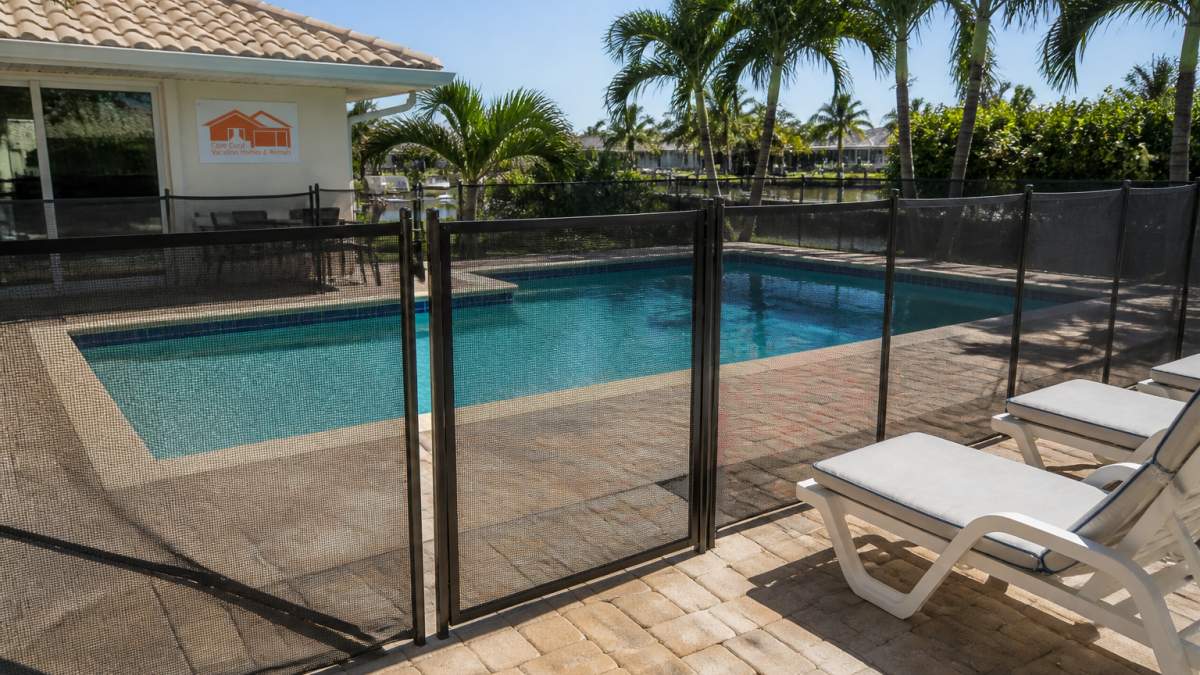
The statewide residential pool safety statute establishes that a pool must be isolated by a barrier that meets defined criteria, including a minimum height, no footholds or handholds that could allow a child to climb, and a gate that is self-closing and self-latching with the latch positioned high enough to be out of a young child’s reach.
Inspections: When They Happen and What They Check
Pool safety is typically verified during the local rental inspection or permit process, not by the state. An inspector will check the barrier, the gate self-closing and self-latching mechanism, and may check for other locally required safety features. Some jurisdictions require an annual inspection; others tie inspection to permit renewal. Keep inspection records on file and note the renewal date, a failed pool inspection can suspend a rental permit mid-season, which is the costliest outcome of all.
Required and Recommended Safety Equipment
Beyond the barrier, owners should document safety equipment and keep records. Common requirements and strong practices include:
- A pool safety alarm on doors and windows with direct pool access, where required by local code.
- A clearly posted pool rules sign, including no-diving and supervision warnings.
- Safety equipment such as a ring buoy or reaching pole kept poolside.
Insurance and Liability Considerations
Pool safety is also a liability question. Standard homeowner policies may exclude or limit coverage for rental use, so confirm that the policy covers short-term rental activity and that pool liability is included. An umbrella policy is a common layer of protection. Document the barrier, the inspection, and the maintenance log, in the event of a claim, that documentation is what demonstrates the owner met the standard of care.
Photograph the barrier, gate latch, and posted rules at each renewal and store the images with the inspection record. If a question ever arises, a dated photo set is the fastest way to show compliance.
Long-Term Stays and Pool Safety
Properties rented for four or eight weeks are still vacation rentals for pool-safety purposes, and the barrier and inspection requirements do not relax because the stay is longer. If anything, longer stays mean more exposure, so confirm the barrier is in good repair at each turnover and keep the inspection current.
Your Florida Short-Term Rental Compliance Checklist
Use this Florida short-term rental compliance checklist before your first booking and again at each renewal. It maps each requirement to the authority that enforces it.
| Requirement | Authority | When to Act |
|---|---|---|
| Vacation rental certificate of registration | Florida DBPR | Before first booking; at renewal |
| Local business tax receipt | City or county tax office | Before first booking |
| Short-term rental permit or certificate of use | City or county | Before first booking |
| Zoning and land-use confirmation | City or county planning | Before purchase or listing |
| Sales tax registration | Florida Department of Revenue | Before first booking |
| Tourist development tax registration | County tax collector | Before first booking |
| Pool barrier and safety inspection | Local building department | Before first booking; annually |
| HOA, condo, and lease review | Private documents | Before purchase |
Work top to bottom. Each row depends on the one above it being confirmed, and a gap anywhere in the stack is a gap in your compliance position.
Choosing a Property Manager Who Handles Compliance
The right property manager turns compliance from a personal liability into a managed process. Ask specifically who holds each registration, who files each tax return, and who is named as the local responsible party.
Before signing, request a written scope that lists every permit, registration, and filing the manager handles, plus the renewal dates. You can also review vacation rental property management fees in Florida to understand the costs involved before committing. You can contact us with questions about your individual property.
Book a Compliant Waterfront Villa in Cape Coral
Compliance work is invisible to guests, which is exactly the point. When you book a properly registered villa, the permits, taxes, and safety inspections are already handled, and your stay is not interrupted by an enforcement issue.
We manage waterfront vacation homes in Cape Coral with saltwater pools, and we welcome long-term stays of four or eight weeks as readily as shorter bookings. Browse our vacation homes to compare what is available, or look specifically at Villa High Tide and Villa Turtle Paradise for two of our waterfront options with saltwater pools.
Frequently Asked Questions
Do I need a vacation rental license in Florida?
Yes. Florida requires vacation rental owners to obtain a license through the Department of Business and Professional Regulation (DBPR) before advertising or accepting bookings. You will also need a local business tax receipt and any county or city permits where the property sits. The license must be renewed annually, and the state can fine or shut down unlicensed rentals. Keep your license number current and visible in listings.
What taxes do Florida vacation rental owners need to collect or remit?
Owners must collect Florida sales tax and any county tourist development tax on rentals of six months or less. You register with the Florida Department of Revenue for sales tax and with the county for tourist tax. Platforms like Airbnb may collect and remit some taxes automatically, but the owner remains responsible for confirming what was paid. File returns on schedule and keep records for at least three years.
Can I rent my homestead property in Florida?
Florida law does not ban renting a homestead property, but local rules may limit short-term rentals, and your homestead exemption could be affected if you rent for extended periods. Check your city or county ordinance for duration and frequency caps. Some areas require a minimum stay of seven days or more. Also review any HOA or condominium documents, which can restrict rentals independently of state law.
What safety requirements apply to Florida vacation rentals with pools?
Florida law requires a safety barrier around residential pools, such as a fence with a self-closing gate, or an approved pool safety cover. Vacation rentals must also have working smoke detectors, carbon monoxide detectors where required, and clearly posted pool rules. Local inspectors may check these items during licensing. Owners should document safety features and keep maintenance records to show compliance during renewal.
How can I check whether a Florida property is eligible for short-term rentals?
Start with the city or county planning and zoning department to confirm the property’s land-use designation allows short-term rentals. Then check local ordinances for duration, frequency, and occupancy limits. Review HOA and condominium rules, and verify the property has a current DBPR license. A title search and permit history can reveal past violations. When in doubt, ask the local code enforcement office in writing before listing.
What is the 75-55 rule for Airbnb in Florida?
The 75-55 rule is a local zoning concept used in some Florida cities, not a statewide law. It typically refers to a requirement that a short-term rental be owner-occupied or that a certain percentage of units in a building or neighborhood be permanent residences. The exact numbers and definitions vary by jurisdiction. Check your city’s ordinance directly, because the rule may not apply in Cape Coral or may be interpreted differently.
Florida’s rental rules keep shifting, and keeping every registration, tax filing, and inspection current is a job in itself. Cape Coral Vacation Homes & Rentals LLC handles that work for owners, with comprehensive property management, local expertise in Cape Coral, and a team that knows the difference between state and local requirements. Get started with Cape Coral Vacation Homes & Rentals LLC and hand off the compliance load while your villa earns.
