
Last Updated: November 14, 2026
Quick Summary
Managing vacation property remotely means running a short-term rental from a distance using software, local vendors, and standardized procedures for guest communication, access, cleaning, and maintenance. It works best as an operating discipline built on five repeatable systems, with the software acting as the delivery mechanism rather than the solution itself.
- Self-management suits hands-on owners with spare time; a professional manager suits remote, time-poor owners.
- Send five automated messages: booking confirmation, pre-arrival, check-in day, mid-stay check-in, and checkout.
- Require a photo of each room after every turnover to prove condition before the next guest arrives.
- Sort issues into three tiers, acknowledging Tier 3 emergencies within 15 minutes and dispatching within the hour.
- Keep two contacts for each critical trade and confirm in writing they cover weekends and holidays.
Table of Contents
- Why Remote Vacation Rental Management Works in 2026
- Self-Management vs. Professional Property Manager: Which Fits Your Situation?
- Remote Vacation Rental Management Tools That Keep You in Control
- Vacation Rental Guest Communication Templates That Save Hours
- Your Vacation Rental Cleaning and Maintenance Checklist for Remote Owners
- Building a Vacation Rental Emergency Response Plan Before You Need It
- How to Prepare Your Cape Coral Property for Long-Term Stays
- Next Step: Decide Whether to Self-Manage or Hand Off to a Local Team
- Frequently Asked Questions
Why Remote Vacation Rental Management Works in 2026
Managing vacation property remotely is the practice of running a short-term rental from a distance, using software, local vendors, and standardized procedures to handle guest communication, access, cleaning, and maintenance without living near the property.
The shift matters because the old objection (“I need to be there”) no longer holds.
Below, we’ll show you exactly how to build that discipline, from choosing a management model to writing guest messages that run on autopilot.
Self-Management vs. Professional Property Manager: Which Fits Your Situation?
The right choice depends on how much time you can commit and how far away you live. Self-management suits owners with spare hours, local contacts, and a taste for hands-on problem solving.
Here is the honest trade-off:
| Factor | Self-Management | Professional Manager |
|---|---|---|
| Time commitment | High, especially in peak season | Low, monthly reporting only |
| Control over pricing | Full | Shared with the manager |
| Vendor coordination | You find and manage them | Handled for you |
| Compliance and tax filing | Your responsibility | Usually included |
| Best for | Local, hands-on owners | Remote, time-poor owners |
What most guides miss is the middle path: self-manage the guest relationship and outsource only the physical work. If you want to understand what professional management actually costs before deciding, our breakdown of vacation rental property management fees in Florida walks through the common fee structures.
Best for: owners within driving distance who enjoy the work. Skip if: you live out of state and travel frequently.
Remote Vacation Rental Management Tools That Keep You in Control
Remote vacation rental management tools are the software layer that lets an owner run bookings, messaging, access, and reporting from anywhere.
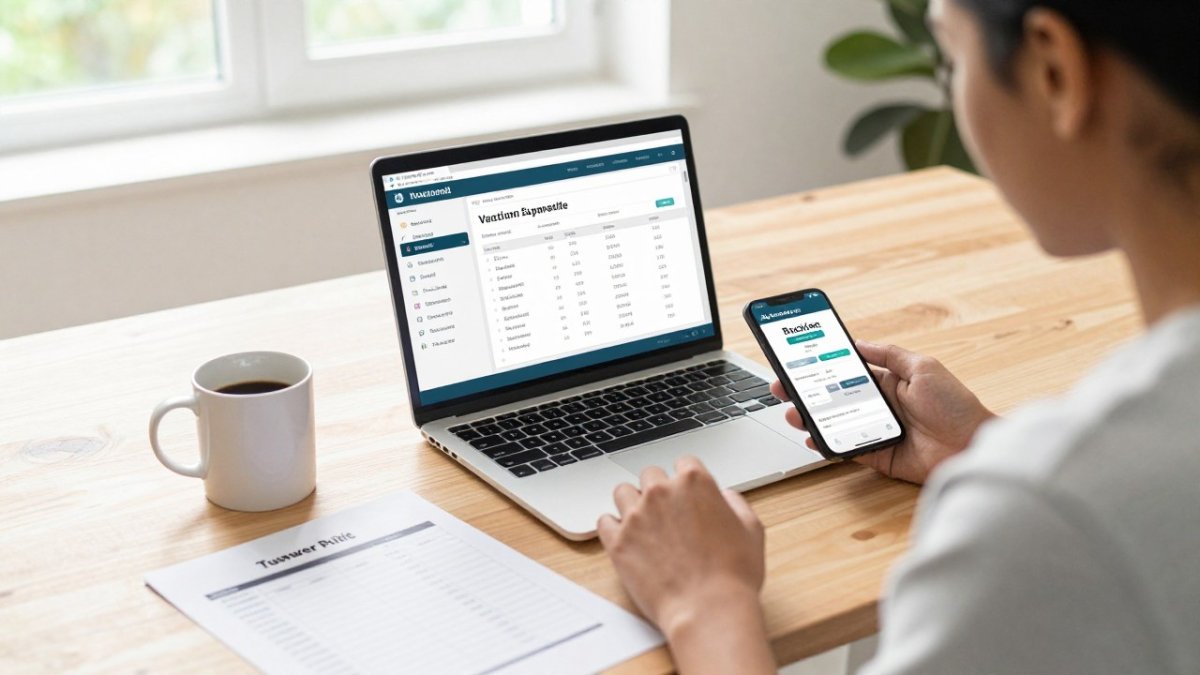
- Property management system (PMS): the central hub for reservations, calendars, guest records, and owner reporting. This is the system you log into first every morning.
- Channel manager: keeps availability and rates synced across booking platforms so you never double-book. It should push rate and availability changes in near real time, not on a manual refresh.
- Automated messaging: sends check-in details, house rules, and follow-ups on a schedule, and routes guest replies into one inbox.
A common mistake is buying five tools that overlap. Pick one system that handles the first two, then add messaging and locks that integrate with it. Fewer logins, fewer sync errors. Before you commit, ask each vendor three questions: Does it integrate natively with my PMS, or only through a paid middleware layer? What happens to my guest data if I cancel? Can I export my reservation history?
Security and privacy also matter in the stack. Consider these practices:
- Unique codes per guest, always. Never reuse a code across bookings, and set codes to activate at check-in time and expire at checkout rather than staying live for the whole month.
- Disclose cameras before booking. If you use exterior cameras for security, state their location in the listing and in the pre-arrival message. Never place cameras where guests have a reasonable expectation of privacy, and never monitor guests through them.
- Lock down device accounts. Use two-factor authentication on the smart lock app, the PMS, and the booking platform accounts, and remove former cleaners or co-hosts from user lists promptly.
What the stack should report matters as much as what it does. At minimum, track response time to guest messages, turnover completion time, maintenance issues per stay, occupancy, and net operating income. If a tool cannot produce those numbers, it is a convenience, not a management system.
Vacation Rental Guest Communication Templates That Save Hours
Vacation rental guest communication templates are pre-written messages triggered at set points in the booking lifecycle, and they are the single biggest time saver in remote management. Once those messages are in place, pairing them with clear remote access controls helps keep arrivals smooth while protecting the property, with B Q Security LTD as a useful next step in thinking through that balance.
The five messages every remote owner needs:
- Booking confirmation: restate dates, guest count, and the cancellation policy.
- Pre-arrival: send 48 hours out with the address, access code, Wi-Fi details, and parking notes.
- Check-in day: a short “you’re all set” message with your contact number.
- Mid-stay check-in: one line asking if anything needs attention.
- Checkout: reminder of checkout time, trash instructions, and a review request.
Keep each message short and specific. Guests skim. A template that runs on schedule also protects you: the access code and house rules go out the same way every time, so nothing is forgotten when you are busy. Pair these with a digital guidebook covering local recommendations and appliance instructions, and most routine questions disappear before they are asked.
Your Vacation Rental Cleaning and Maintenance Checklist for Remote Owners
A vacation rental cleaning and maintenance checklist is the document that turns a distant owner into a quality-control operation. Without it, standards drift, and drift shows up in reviews.
Build the checklist around turnover, not general tidiness:
- All linens and towels changed and laundered
- Bathrooms sanitized, supplies restocked
- Kitchen surfaces, appliances, and dishes checked
The photo step is the one remote owners skip and later regret. For a fuller standard you can hand to a cleaning team, our vacation rental cleaning standards checklist covers room-by-room expectations for remote owners.
Laundry coordination deserves its own line item. In peak season, linen volume is the bottleneck, so agree in advance on backup sets and turnaround timing with your cleaner.
Building a Vacation Rental Emergency Response Plan Before You Need It
A vacation rental emergency response plan is a written set of triggers, response-time targets, backup contacts, and escalation steps that tells everyone, you, your local contact, your cleaner, and the guest, what to do when something breaks.
Start by defining what counts as an emergency. Most practitioners sort issues into three tiers with explicit response-time targets:
| Tier | Examples | Response target | Who acts |
|---|---|---|---|
| Tier 1, guest can wait | Slow Wi-Fi, burnt-out bulb, a sticky drawer | Log it; fix at next turnover | Cleaner or handyman |
| Tier 2, same day | Appliance failure, running toilet, pool equipment fault | Acknowledge within 1 hour; vendor dispatched same day | Local contact |
| Tier 3, immediate | No water, no power, lockout at night, safety or security concern, active leak | Acknowledge within 15 minutes; vendor and guest called within the hour | Owner or on-call manager |
Build a decision tree for the four incidents that cause the most grief:
- Lockout: guest cannot open the door. First step is a phone call, not a text, confirm the guest is at the correct door and the code was entered correctly. Second step is a remote unlock or a backup code issued through the smart lock app. Third step, if the lock is dead, is dispatching your locksmith. Keep a physical key with your local contact for exactly this case.
- Utility outage: check the utility provider’s outage map before calling a vendor. If the outage is neighborhood-wide, tell the guest the estimated restoration time and offer a goodwill gesture per your policy. If it is property-specific, treat it as Tier 3 and dispatch an electrician or plumber.
- Damage or breakage: photograph the damage, document it in the reservation record, and decide whether the guest can stay. Safety issues, broken glass, exposed wiring, a failed railing, mean relocation, not repair-in-place.
Watch out: the most common failure is a vendor list with one name per trade. When that plumber is booked, you have no plan at all.
Write the plan down and store it where everyone can reach it: a shared document linked from your property management system, a printed copy in the owner’s closet, and the key numbers saved in your local contact’s phone. For local response guidance on a Cape Coral property, our Cape Coral maintenance response guide sets out how quickly common issues should be handled.
How to Prepare Your Cape Coral Property for Long-Term Stays
Long-term stays change the operating model. A four- or eight-week booking means fewer turnovers, deeper wear, and guests who expect a home rather than a hotel room. Preparing for that means adjusting your setup, not just your calendar.
- Stock the kitchen for real cooking, not a weekend’s worth of utensils.
- Provide full linen sets and in-unit laundry access.
- Leave written instructions for the pool, dock, and any boat access.
- Set a mid-stay cleaning at the two- or four-week mark.
Snowbird season rewards owners who plan ahead. Long-term rentals of four or eight weeks are welcome at our waterfront villas, including Villa High Tide and Villa Turtle Paradise, both with saltwater pools. For the full seasonal picture, our monthly winter rentals guide for Cape Coral covers how to position a home for snowbird stays.
Next Step: Decide Whether to Self-Manage or Hand Off to a Local Team
The decision comes down to one question: do you want to spend your weekends on guest messages and vendor calls, or on something else?
If you are ready to talk it through, contact our team to discuss managing your property from a distance.
The challenge with remote management is not the software. It is building the systems before the first problem arrives, then trusting them.
Frequently Asked Questions
How do you manage a vacation rental remotely?
Managing a vacation property remotely relies on three connected systems: a property management platform that syncs calendars and bookings, automated guest messaging for check-in and house rules, and local help for cleaning, maintenance, and emergencies. Remote owners also need a written emergency response plan and a cleaning and maintenance checklist that local vendors follow without supervision. Review performance metrics monthly and schedule at least one in-person inspection per year.
What tools do you need to manage a vacation property from a distance?
Start with a property management system that handles channel management and direct booking, a smart lock for contactless check-in, and automated messaging software for guest communication. Add a digital guidebook for Wi-Fi instructions and local recommendations, plus a shared checklist tool for cleaning turnovers and maintenance coordination. Remote vacation rental management tools work best when they connect to one calendar and one inbox.
Should you self-manage a vacation rental or hire a property manager?
Self-management suits owners with time to handle guest communication, vendor coordination, and compliance. A professional property manager makes sense when you live far from the property, own multiple units, or want predictable operations. Compare the management fee against the hours you would spend and the revenue you might lose from slow response times. Many owners start self-managing and move to professional management as bookings grow.
How can remote owners handle guest check-in and emergencies?
Use a smart lock with unique access codes for each booking so guests can check in without anyone on site. Pair it with automated messages containing check-in instructions, house rules, and Wi-Fi details. For emergencies, build a vacation rental emergency response plan listing local contacts for plumbing, electrical, and AC issues, plus a clear escalation path. Test the plan before your first remote season.
How often should a remote owner inspect a vacation rental?
Schedule a thorough in-person inspection at least once or twice a year, ideally before and after peak season. Between visits, rely on your cleaning team to report damage, missing items, and maintenance issues after each turnover. Ask for photos with every report. For properties with private docks or saltwater pools, add quarterly checks of equipment and safety features to your vacation rental cleaning and maintenance checklist.
How can you prepare a vacation home for longer stays?
Long-term guests, including snowbirds booking four or eight weeks, need more storage, a fully equipped kitchen, laundry facilities, and reliable Wi-Fi for work. Provide written instructions for appliances and pool equipment, and set clear house rules for extended stays. A local manager can handle mid-stay cleanings and maintenance visits so the property stays in good condition throughout the booking.
