

Last Updated: November 8, 2026
Quick Summary
Vacation rental maintenance response time expectations split into four stages: acknowledgment, dispatch, arrival, and resolution, each with its own target. Guests measure speed in silence, so acknowledge within 15 minutes for emergencies, 1 hour for urgent issues, and 4 hours for routine requests, then update at every stage change.
- Emergency requests need acknowledgment within 15 minutes and updates every 30 minutes until resolved.
- Urgent issues get acknowledgment within 1 hour and a dispatch window within 2 hours.
- Routine requests are acknowledged within 4 hours and scheduled within 24 hours.
- Sort every request into emergency, urgent, or routine before assigning a technician.
- Never send a guest back into a hazard to save a few minutes on a repair.
Table of Contents
- Why Maintenance Response Time Defines the Guest Experience
- The Four Stages of Maintenance Response Time Expectations
- Vacation Rental Emergency Maintenance: Safety First, Speed Second
- Guest Communication for Maintenance Issues: Templates and Update Cadence
- Building a Vacation Rental Maintenance Checklist That Prevents Calls
- How Property Manager Maintenance Response Time Affects Reviews and Revenue
- When Repairs Can’t Finish During the Stay: Workarounds and Service Recovery
- Book a Waterfront Villa With Maintenance You Can Count On
- Frequently Asked Questions
Why Maintenance Response Time Defines the Guest Experience
A guest wakes up in a Cape Coral villa, turns on the shower, and nothing comes out. What happens in the next thirty minutes decides whether that family books again or writes a review that follows the property for years.
At Cape Coral Vacation Homes & Rentals LLC, we treat response time as part of the guest experience, not an afterthought.
Here is the core tension most guides ignore: guests do not measure your speed in minutes. They measure it in silence. A slow repair with constant updates feels faster than a quick repair with radio silence. That single insight should shape every standard you set.
Below, we break down the four stages of response, the severity matrix that tells you what to fix first, and the guest message templates that keep a problem from becoming a review.
The Four Stages of Maintenance Response Time Expectations
Most operators track one number: how long until the repair is done. That is the wrong metric. A single “resolution time” hides the stage where guests actually lose patience, which is the gap between reporting a problem and hearing a human respond.
Split maintenance response time into four separate targets. Each one gets its own standard, its own owner, and its own way of being measured.
Acknowledgment, Dispatch, Arrival, and Resolution Targets
Acknowledgment is the first human reply confirming the request was received. Dispatch is assigning a maintenance technician or vendor. Arrival is when someone is physically on site. Resolution is when the guest can use the amenity again.
Here is one way to set the four stages for a vacation rental:
| Stage | What it means | What the guest needs to hear |
|---|---|---|
| Acknowledgment | Request received and logged | “We have it, here is what happens next” |
| Dispatch | Technician or vendor assigned | “Your tech is scheduled” |
| Arrival | Someone on site | “We are at the property now” |
| Resolution | Amenity usable again | “It is fixed, here is what we did” |
The mistake we see most often is treating acknowledgment and resolution as the same thing. They are not. A guest who gets a fast, clear acknowledgment will wait far longer for a repair than a guest who hears nothing. For a worked example of how a local property manager structures these stages, see our Cape Coral vacation rental maintenance response guide.
Vacation Rental Emergency Maintenance: Safety First, Speed Second
Emergency maintenance is any issue that threatens guest safety or makes the home unfit to stay in.
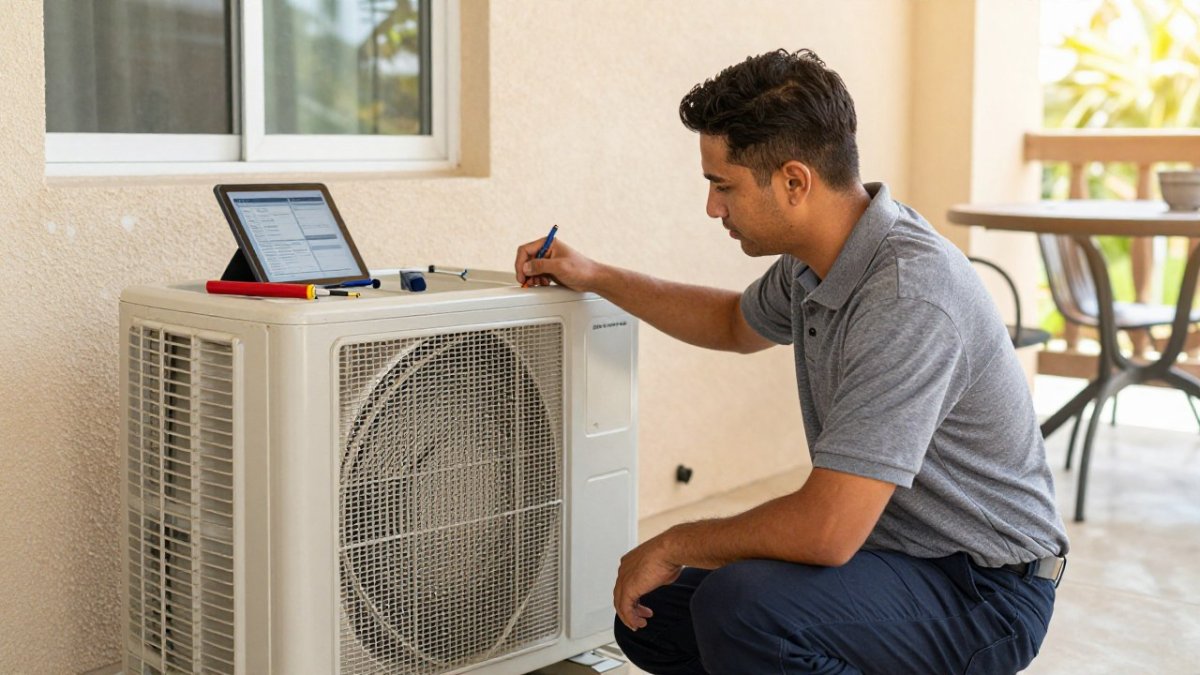
A sound rule: never send a guest back into a hazard to save a few minutes.
Sort every request into three buckets before you assign anyone:
- Emergency: safety or habitability at risk. Act now, after-hours coverage required.
- Urgent: comfort badly affected but not dangerous, such as a broken ice maker or a slow drain.
- Routine: cosmetic or minor, can wait for the next business window.
Watch out: the most common failure is labeling a comfort issue as routine on a Friday afternoon, then leaving a family without air conditioning all weekend. When in doubt, escalate.
To make these categories actionable, a severity matrix can account for guest impact. Once the matrix defines what needs attention first, A2Z Cleaning & Linen Services can help make timely guest updates part of the response so expectations stay clear while an issue is being resolved.
Once you assign a severity level, set distinct response-time targets for each stage: acknowledgment, dispatch, arrival, and resolution.
Separate legal duties from hospitality best practices. Many jurisdictions have laws requiring landlords to maintain habitable conditions, but vacation rentals may fall under different regulations. Always check local laws, but treat them as a floor, not a ceiling.
Ensure you have after-hours coverage and an escalation path. A guest who reports a burst pipe at 10 p.m. needs a human to answer, not a voicemail. Options include a rotation, an answering service, or a 24/7 maintenance vendor.
Guest Communication for Maintenance Issues: Templates and Update Cadence
Silence is the real enemy.
Update cadence by severity:
- Emergency: Acknowledge within 15 minutes. Provide an initial plan within 30 minutes. Update every 30 minutes until resolved, even if the update is “still working on it.” Confirm resolution immediately.
- Urgent: Acknowledge within 1 hour. Provide a dispatch window within 2 hours. Update every 2 hours until resolved. Confirm resolution.
- Routine: Acknowledge within 4 hours. Provide a scheduled window within 24 hours. Update daily until resolved. Confirm resolution.
These cadences ensure the guest is never left wondering.
Here are message templates you can copy and adapt:
Acknowledgment (Emergency): “Hi [guest name], thanks for letting us know about the [issue]. This is a priority. I have dispatched a technician and will update you within 30 minutes with a plan.”
Acknowledgment (Urgent): “Hi [guest name], thanks for reporting the [issue].
Acknowledgment (Routine): “Hi [guest name], thanks for letting us know about the [issue].
Dispatch update: “Update: [technician name] is scheduled to arrive between [window]. You do not need to be home.
Delay update: “Hi [guest name], just a quick update: the technician is running slightly behind and will now arrive at [new time].
Workaround: “While we arrange the full repair, here is a temporary fix so you are comfortable: [workaround]. I will keep you posted.”
Resolution: “All set. [Technician] completed the repair and tested it. Sorry for the disruption, and thank you for your patience.”
Two rules make these work. First, name the next checkpoint so the guest is not left guessing. Second, avoid promising a time you cannot hit, since a missed promise stings more than a longer, honest window.
Watch out: failing to update when there is no news is a common mistake. Guests interpret silence as neglect.
Documenting all communication in your property management system creates a record for quality assurance and helps with training.
Building a Vacation Rental Maintenance Checklist That Prevents Calls
The fastest repair is the one you never needed. A vacation rental maintenance checklist that runs on a schedule cuts guest-initiated calls before they happen. Preventive maintenance is cheaper than emergency maintenance and far kinder to your reviews.
Build the checklist around the systems guests touch most:
- Test air conditioning and replace filters before each stay
- Check all toilets, taps, and drains for slow flow
- Confirm hot water reaches every shower
- Test smoke and carbon monoxide detectors
- Inspect pool equipment and saltwater chemistry
- Check Wi-Fi speed in every room
- Confirm locks, keys, and door codes work
- Look for leaks under sinks and around the water heater
A common mistake is running this checklist only between peak-season bookings. Run it before every arrival during busy months and on a fixed weekly schedule in slower ones. For practical tips that reduce guest repair calls, our guide to vacation rental maintenance tips that work walks through the preventive tasks that pay off. Pair the checklist with clear cleanliness and maintenance standards so the property is always guest-ready.
How Property Manager Maintenance Response Time Affects Reviews and Revenue
Reviews are where response time shows up in the numbers. A guest who waits days for help tends to mention it, and a single negative review about maintenance can drag down a listing’s appeal for months. The reverse is also true: fast, communicative service often earns a five-star review even when something broke.
Many owners focus on the nightly rate and the photos, but the guest experience also depends on how quickly maintenance issues are handled. Faster acknowledgment, clear updates, and reliable repairs can help protect booking conversion and repeat guests.
If you are weighing professional management against listing it yourself, it helps to understand what the service includes. Our breakdown of vacation rental property management fees in Florida explains the scope and how it is structured, so you can compare the trade-off honestly.
When Repairs Can’t Finish During the Stay: Workarounds and Service Recovery
Some repairs cannot be completed while guests are in the home. A part is on order, a specialist is booked out, or the fix needs the unit empty. The stay still has to work. This is where workarounds and service recovery carry the day.
Start with a workaround that keeps the amenity usable in some form. A portable air conditioner, a temporary fan setup, extra towels, or access to a second bathroom can bridge the gap. Then plan the real repair for the changeover day and tell the guest the plan in plain terms.
Service recovery is the follow-through. A small, sincere gesture, an early check-in next time, a note of apology from the team, goes a long way when paired with honest communication. What most guides miss is that guests rarely expect perfection. They expect to be kept informed and treated fairly. Deliver that and a mid-stay problem becomes a story about great service, not a complaint.
Book a Waterfront Villa With Maintenance You Can Count On
A villa is only relaxing when you know help is a message away. Cape Coral Vacation Homes & Rentals LLC manages waterfront homes with saltwater pools, private docks, and the responsive maintenance standards described here. Guests who care about a fast, clear response can browse our waterfront vacation homes in Cape Coral, including “Villa High Tide” and “Villa Turtle Paradise,” both built for families and groups who want a carefree stay. Long-term stays of four or eight weeks are welcome too.
The difference between a good trip and a stressful one often comes down to how fast someone answers when something breaks. Cape Coral Vacation Homes & Rentals LLC offers well-equipped villas and professional property management, providing expert care for guests and reliable service for owners. Get started with Cape Coral Vacation Homes & Rentals LLC and book a waterfront villa with maintenance you can count on.
Frequently Asked Questions
What is a reasonable maintenance response time for a vacation rental?
Split it into stages rather than one number. A guest should get an acknowledgment within minutes, a dispatch decision within the hour for urgent items, and a technician on site the same day for anything affecting safety or essential services. Routine requests can wait until the next business day. The key is publishing these targets in your rental agreement so guests know what to expect, then meeting them consistently. A clear maintenance response time standard protects reviews and gives your team a benchmark to measure against.
How should a guest handle a maintenance issue that isn’t resolved?
Report it through the property manager’s official channel first, with a photo and a description of the impact. If the first response misses the stated target, follow up in writing and ask for a resolution timeline. Escalate to the emergency contact only if the issue involves safety, water intrusion, or loss of essential services like AC or plumbing. Keep a record of every message. Many managers log each maintenance request as a work order so there is a documented trail.
What belongs on a vacation rental maintenance checklist?
A working checklist covers three layers: pre-arrival inspection (AC filters, plumbing, locks, pool equipment, smoke detectors), seasonal preventive maintenance (roof, irrigation, pest control, dock hardware), and turnover checks between guests. Include photo documentation for each item so you can spot changes over time. The checklist should also name who handles each task and the escalation path when something fails. A checklist that prevents calls is worth more than one that only records them.
How does response speed affect guest reviews and bookings?
Guests forgive breakdowns more readily than silence. A fast acknowledgment and a realistic repair timeline often turn a potential negative review into a positive mention of service. Slow or missing responses are among the most common triggers for complaints in short-term rentals, and those complaints directly affect future booking conversion. Tracking your response rate and resolution time per issue type lets you find weak spots before they show up in reviews.
